

























Colour Temperature
During the 19th Century, British physician William Thompson (Lord Kelvin) devised the Kelvin temperature scale. During his research he heated a block of carbon, which began to glow red, then yellow, and finally produced a bright blue-white light.
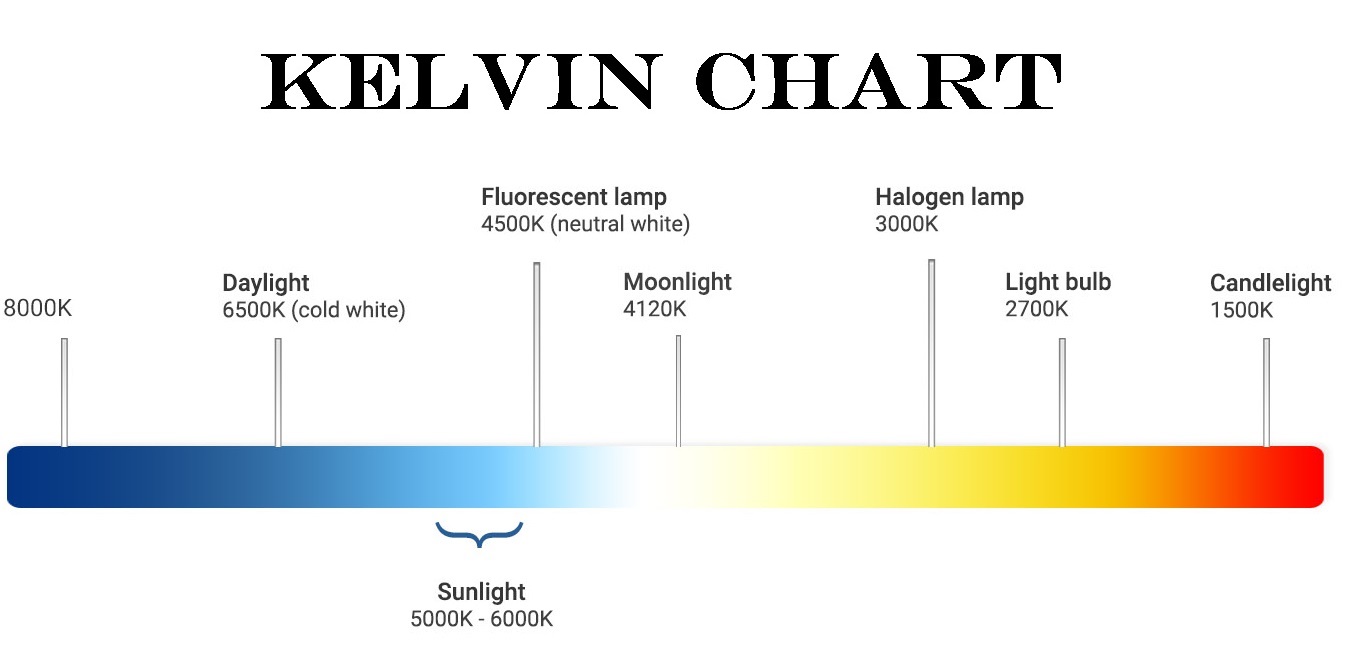
The path of these changing colours is the essence of the Kelvin scale because each colour occurs at a specific temperature. For example, the filament of an incandescent or halogen bulb produces a yellow light at a temperature of 2700 kelvin (2700 K).
The one thing to remember is that a higher kelvin colour temperature equals to a cooler bluer looking light. Lower colour temperatures mean a warmer light. Below is a Kevlin Colour Temperature guide showing the difference in colour to match the light you want.